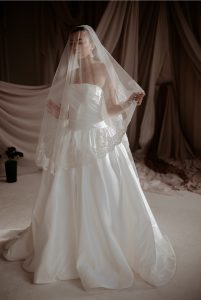
A traditional wedding includes certain features that seem to come as standard, one of which is the bridal veil. But have you ever wondered why brides wear a veil and where the tradition comes from?
What is the history of the wedding veil?
The veil is thought to originate in Roman times, as a way of protecting the bride from evil spirits by disguising her face. The roots of it are murky, with mixed reports of how the veil came to be, but later versions of the tradition are certainly less superstitious.
In Jewish religious ceremonies, the custom is thought to come from the Bible story of Rebecca covering her face when she first saw her future husband, Isaac.
Others say another Biblical figure, Jacob, accidentally marrying the wrong woman, is the source of the idea.
Whatever the origins, it developed over millennia into a wedding ritual where it symbolises that the bride-to-be is forbidden to every other man.
It embodies the idea that to gaze on her face was improper, and her beauty is only for her husband to admire.
Catholic weddings taking place in a church traditionally include a veil to cover the face while walking down the aisle.
During the ceremony, the veil is lifted to reveal the bride’s face to her husband, usually after the exchange of rings, allowing them to kiss. Her face then stays uncovered for the rest of the wedding.
In many churches, bare shoulders and collarbones should be covered during a Catholic Mass, and a long, flowing veil does the job well. Hiding the face with a white veil signifies the bride’s chastity, purity and humbleness before God and her future husband.
Many modern veils don’t always come with a piece of lace or fabric to cover the face, nor the weight of centuries-old tradition. A bridal veil can be considered simply as a bridal accessory rather than an essential element of an ancient ritual.
Do you have to wear a wedding veil?
Bridal fashion around wearing veils changes with seasons, but the tradition remains, leaving brides with a decision to make. If you are having a religious ceremony in a church or temple, wearing a veil might be the right choice for you.
Today, it is acceptable to break from old traditions and choose wedding attire that matches your personal style. The rules for veils are equally flexible. They can be a statement accessory, or they can be discarded completely in favour of a beautiful hairpiece or updo.
While some may believe a veil is a nuisance accessory or an unnecessary cost, it is a personal choice for any bride, traditional or not.